By Kendra Olney Lee
How to generate leads at events was not top of mind when I attended conferences, seminars, workshops, local gatherings, or any other professional events early in my career. No, at that time I was too busy hanging out near the potted plants. Trying to blend in with the leafy fronds. Occasionally I wondered when the last time a fern was watered. More frequently, I was letting negative voices keep me from approaching my peers.
What will I talk about?
They don’t know me. Why would they want to talk about our solutions?
Eventually I silenced this cacophony of negativity. Now I regularly use speaking at events as a B2B lead generating activity and networking to meet new people. Of course, I didn’t immediately jump from talking to the greenery to addressing an actual audience. I started smaller and engaged my fellow attendees – before, during, and after the event. It’s a repeatable template that you can follow even if you’re attending a virtual event.
Whether you are reluctant or rusty, this template will help you turn your event networking into a gold mine of valuable contacts and qualified leads.
Before You Go
Make a list of people you want to meet and why
Scan who is speaking. Check the social media pages for the event and see who is posting and saying they’ll attend. Then start compiling a list of people you want to meet. For every person you identify, add a reason why you want to meet them next to their name.
Your initial reason for outreach doesn’t have to be strictly
business-related
At one conference, I really wanted to know how my peers found childcare for their kids (and if they needed sales coaching, of course)! At another event, I wanted to find the best beach towns for a vacation. Armed with my list of people to ask, I grew my professional network at each event, had
interesting conversations, and got some interesting personal advice.
Having one personal topic and one business topic in mind ensures you’ll have a conversation that isn’t just about business. People relax and you have lively discussion. That makes it easier to shift to the business side of the discussion that you also want to have. Now that you’ve connected
with a new person, you can discover if you should be working together.
Update your social profiles
Caution! Don’t find yourself in this position. You nab one of your high-priority targets and have a good, quick 15-minute talk with them. They promise to reach out on LinkedIn. You smile and say great, but are inwardly panicking. You have no idea what your profile says. Your business page is even worse – the About section reflects services you provided 3 years ago. No one has posted in ages.
Review business-related social accounts before any event
Update your LinkedIn profile. Add any certifications, awards, or key achievements you want to highlight. On your personal LinkedIn page, double-check your:
- Photo + header image
- Website link
- Tagline
- About
- Experience
- Bio
Now that your social profiles are set, you can do some pre-event outreach.
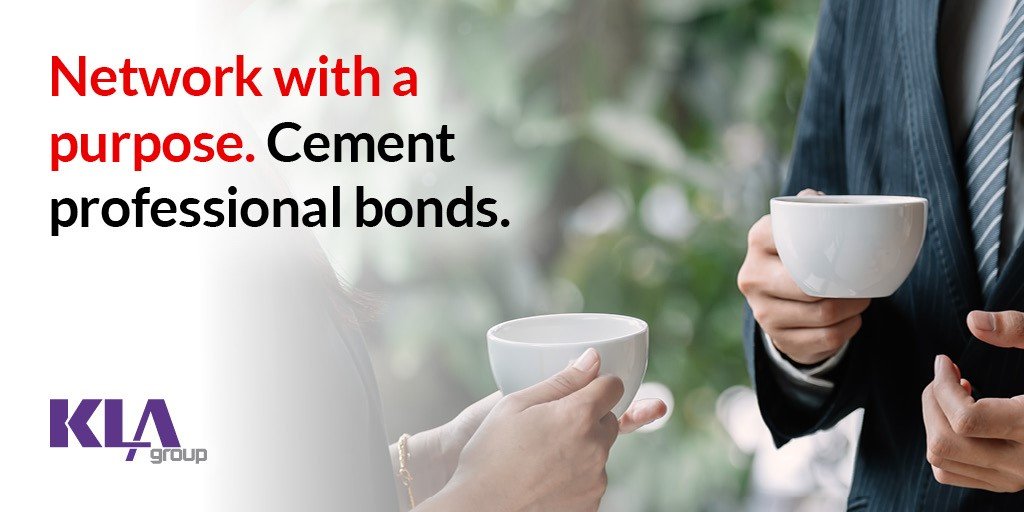
Pre-arrange coffee meetings
Conferences are hectic. If you wait until the event starts to try and schedule meetings with prospects, they’ll be booked. Use social media or email to send a quick invite to 2 or 3 of the people you most want to meet. Be short, but friendly. Here’s a sample script you can adopt:
I see you’ll be at [Event Name] too. I’m really looking forward to [speaker/topic]! Aren’t you? Would you be interested in grabbing a cup of coffee between sessions on [day]? I’d really like to [reason for outreach].
See you soon!
Signature
Invite people to your virtual booth
Virtual events and conferences can be as interactive and professionally fulfilling as attending in person. Most platforms let you set up a virtual booth that you can invite other attendees to visit. Take advantage of this and any other digital networking features to set up meetings with people on your contact list.
Use social media to let people know you’re attending
After you’ve invited the top people you want to be sure to meet with, send a quick “Hope to see you there” message to the rest of your list. Send an email. Post it on social media in case there are people who want to meet with YOU that you hadn’t thought of. Direct message anyone who hasn’t replied to your email. All these strategies get the conversation started and could lead to quick meetings during the event. You’ll even discover that people who won’t be attending may want to set up a call anyway!
At the Event
Work your way through your contact list
Here’s where all your pre-event work pays off. You’ve digitally broken the ice with most of your contact list. You have meetings on the books. Now, when you approach someone, it doesn’t feel “out of the blue” or random. You have a purpose and can start a conversation by saying: “Hi [Name], it’s [your name]. I sent you a quick message the other day on LinkedIn – I’m glad we ran into each other!”
This way if they forgot about your comment or message, they have an easy way to respond. You put them at ease, and you feel less self-conscious. Everything about the encounter is relaxed.
Here are 2 ways you can organically cultivate a lighter, stress-free atmosphere.
1. Mix in fun activities
It’s easy to end up spending time isolated in a hotel room when you attend a conference. Break out of this bad habit by getting a group together for dinner. Or find time where you and a few others can go see a local attraction or take a walk outside. Then have genuine conversations – even if they aren’t business related. This may not immediately uncover new business opportunities. That’s okay. You’re expanding your professional network.
2. Snag speakers on days they aren’t presenting
Even the most experienced speakers are a bit frantic on the day they speak. They won’t have time to engage in a true conversation before their talk. After, a crush of people will rush up to meet them. Avoid these issues entirely by approaching them on an off day.
When you discover a B2B lead generation opportunity
We tend to want to dive right into next steps when we discover a qualified potential prospect. Sometimes this enthusiasm is overwhelming. Remember you want to keep everything and everyone relaxed. Don’t give them a list of to-dos. Tell the person when and how you’ll follow up with them after the event. Then do it.
If you’re virtual …
Drop by the main exhibit hall and engage in the general chat. See if anyone from your list is there. Keep LinkedIn open. Quickly accept invitations and chat with people. They may be event participants too.
Invite others to have a virtual cup of coffee or even dinner. Everyone could order takeout and have the same kind of authentic conversations they’d have while grabbing a bite together at a conference.
After the Event
Use LinkedIn to reach out to anyone you didn’t connect with
You probably won’t talk to everyone you want to at the event. You don’t have to because technology eliminates missed connections. Use LinkedIn or send an email. Write a warm, engaging introduction. Think of what you’d say if you had met them in person, then write that.
If you’re reaching out to someone whose session you attended, tell them which session. Share what was most valuable or ask a follow-up question. This tactic works for both virtual and in-person events.
Follow through on any to-dos that emerged from conversations
You had clear-cut reasons for reaching out to your fellow attendees. Each conversation should have produced an action item for you. Give yourself a firm deadline for following through on each one. It’s easy for “I’ll do that later” to turn into “I’ll get to it tomorrow” and “By the end of the week, I’ll email them.” Suddenly it’s a month after the event, and you’re finally getting around to contacting the person you met. At this point, they might not remember you. Even if they do, you’ll look unreliable. Do this instead:
- 5 guidelines for your post-event outreach
- Reach out within 5 business days of the event conclusion
- Put the event name in the subject line so prospects easily remember you
- Use a short personable opening
- Share why you’re reaching out again
- End the message with a clear call-to-action
Follow up with new prospects
Reaching out to a prospect after an event is a little different. Use the same 5 guidelines as above, but you want to be more direct. Keep all your messaging focused on what they shared with you when you met. Your call to action should be to ask for a meeting. Propose specific times to meet or share a link to your calendar so they can pick the time that works best for them.
What’s Your Favorite Way to Generate Leads at Events?
How do you generate leads at events? Let us know here, and we’ll share it in our weekly tip.
If you aren’t getting B2B leads, let’s talk
Throwing your energies into a B2B lead generating system that doesn’t produce results is demoralizing. Your business deserves a steady flow of opportunities. Let’s talk about what you’re doing and start to figure out why you aren’t getting leads. Book a meeting now.
Read More Related Articles